Gi vs. No-Gi BJJ: What’s the Difference and Which Should You Start With?
Walk into any BJJ academy and you’ll see two very different classes — one in heavy cotton jackets, the other in rashguards and shorts. Both are Brazilian Jiu-Jitsu. Both will humble you. But they feel like completely different sports, and choosing where to start can shape your first year on the mats.
Part 1 What is Gi BJJ?
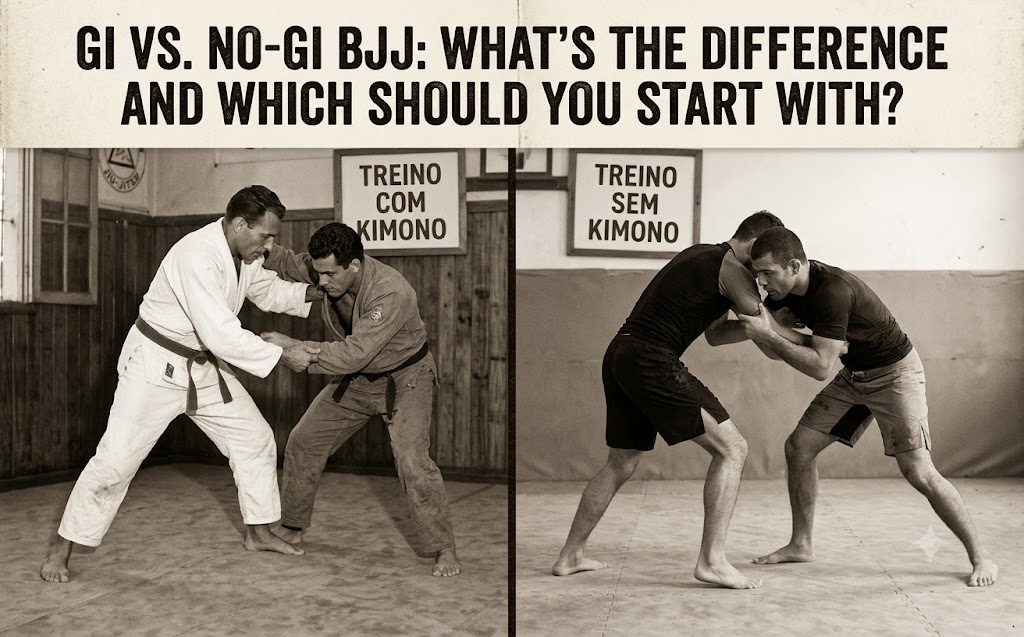
Gi BJJ is the traditional version of the art, practiced in the same heavy cotton uniform you’ve likely seen in old Gracie family photos — a jacket, pants, and a belt that signals rank. The gi itself becomes part of the game. Fighters grip the collar, sleeves, and pants to control posture, set up sweeps, and lock in submissions like collar chokes that simply don’t exist without fabric to grab.
Did You Know?
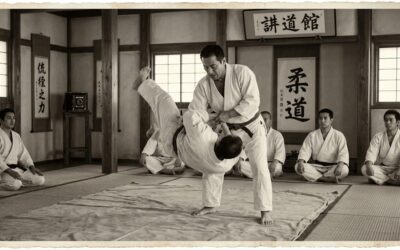
The gi traces back to the Japanese judogi, brought to Brazil by Mitsuyo Maeda in the early 1900s. The Gracie family adapted it as Judo evolved into what we now call Brazilian Jiu-Jitsu.
Part 2 What is No-Gi BJJ?
No-Gi BJJ strips away the uniform entirely. Practitioners wear a rashguard and grappling shorts or spats instead, which means there’s no fabric to grip. Without collars and sleeves to control an opponent, athletes rely more on underhooks, overhooks, and direct body control. The pace is faster, sweat makes everything slipperier, and the game rewards tight, efficient positions over grip-based stalling.
Part 3 Side by Side
Gi
Slower & Technical
Grip fighting, collar chokes, belt-ranked progression. Rewards patience and precision over athleticism.
No-Gi
Faster & Athletic
Underhooks, scrambles, leg locks. Closer to wrestling and directly transfers to MMA.
| Factor | Gi | No-Gi |
|---|---|---|
| Uniform | Jacket, pants, belt | Rashguard, shorts/spats |
| Pace | Slower, positional | Faster, dynamic |
| Grips | Collar, sleeves, pants | Underhooks, overhooks, body locks |
| Submissions | Wider variety, gi-specific chokes | Fewer chokes, more leg locks |
| Belt rank | Yes | No formal system |
| MMA relevance | Less direct | More directly transferable |
Part 4 Which Should You Start With?
There’s no universally correct answer — it depends on your goals.
Start With Gi If You…
- Want the traditional BJJ experience and belt progression
- Are drawn to technical precision and want to slow the game down while learning
- Plan to compete in gi tournaments
- Like the idea of grip-based control as your foundation
Start With No-Gi If You…
- Are mainly interested in MMA or self-defense without a uniform
- Prefer a faster, more athletic pace
- Find gi grips frustrating as a beginner
- Are coming from a wrestling or judo background
“Train both. Gi teaches you patience and control. No-Gi teaches you to scramble and finish fast. Together, they make you complete.” — Common wisdom among BJJ black belts
Part 5 The Honest Answer: Try Both
Most experienced practitioners will tell you the real advantage comes from training both. Gi builds discipline, patience, and grip-based control that transfers everywhere — even when there’s no gi to grab, your instincts for control are sharper. No-gi sharpens your scrambling, athleticism, and ability to finish fast.
Many gyms, including ours, rotate gi and no-gi classes throughout the week specifically so students can build both skill sets from day one. If you’re just starting out, there’s no harm in dropping into both kinds of classes and seeing which one your body and mind respond to. Your jiu-jitsu will be better for it either way.
Ready to Try Gi & No-Gi BJJ?
Train under a legitimate Pedro Sauer lineage black belt in Bangkok. Your first class is free.
Want to try both styles yourself? Book a free trial BJJ class in Phutthamonthon, Bangkok — gi and no-gi classes for all levels.